
The Historical Journey of Homeopathic Education: From Hahnemann to Modern Schools

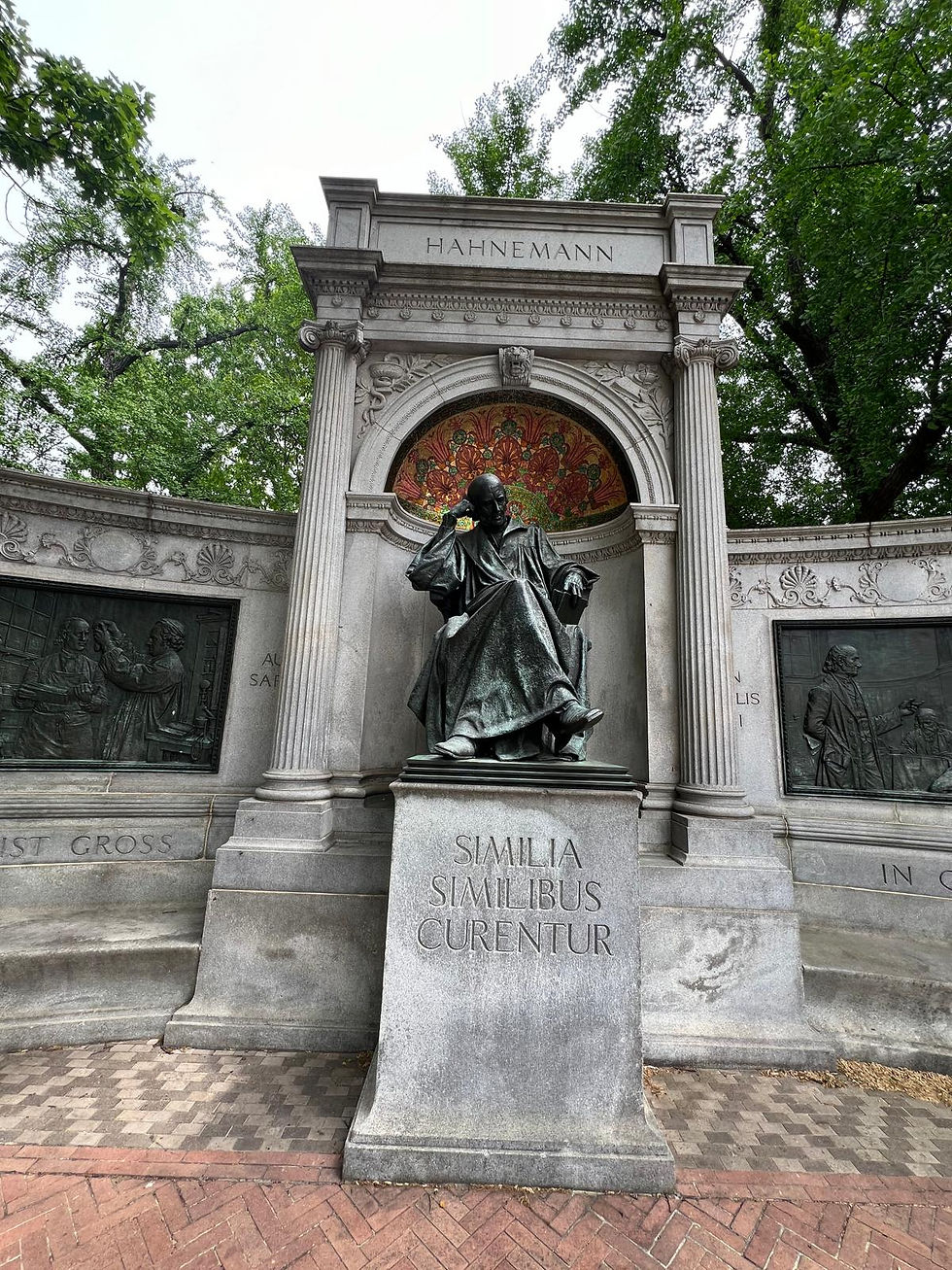
When we speak of homeopathy, the first name that comes to mind is undoubtedly Samuel Hahnemann. He sharply criticized the medical practices of his era and, in return, faced intense opposition. Yet despite all obstacles, he persisted, researched tirelessly, and laid the foundations of a new medical approach.
In this article, we explore the historical development of homeopathic education, the turning points in Hahnemann’s life, and how we arrived at where we are today.
A Turning Point Born from the Scarlet Fever Epidemic: The Rise of Belladonna
The 1799 scarlatina (scarlet fever) epidemic became a major turning point that brought Hahnemann’s work into public awareness. With Belladonna, he achieved remarkable success not only in treatment but also in prophylaxis the preventive use of the remedy.
He published these findings in 1801 and 1825, and when Hufeland’s medical journal later published an article on Belladonna’s protective power, interest in Hahnemann’s research grew rapidly.
The Leipzig Years and the First Attempts at Formal Education
In 1811, Hahnemann attempted to establish a formal homeopathic institute for physicians, but the effort was unsuccessful. Although he continued teaching informally at home, no official school emerged.
His 1812 publication, A Medical Dissertation on the Helleborism of the Ancients, opened the door for him to lecture at Leipzig University. His courses initially attracted large audiences; however, because of his outspoken criticism of contemporary medical practices, resistance grew ultimately leading to his expulsion from the university.
Nevertheless, he continued working with a group of loyal students, meeting several times a week to refine his methods.
“Half-Homeopaths” and a Damaged Reputation
One major challenge of Hahnemann’s era was the rise of practitioners who used the term homeopathy while promoting their own theories. In an open letter published in the Leipzig Daily in 1832, Hahnemann referred to these individuals as “half-homeopaths.”
He argued that they distorted the scientific integrity of homeopathy and harmed the discipline by mixing it with personal inventions.
The First Homeopathic Hospitals and Educational Institutions
In 1833, on the occasion of Hahnemann’s medical anniversary, donations were collected to establish the first homeopathic hospital and training institution in Leipzig. This became one of the foundational landmarks of modern homeopathic education.
Although it closed in 1842 due to financial difficulties, its historical significance remains profound. Hahnemann did not work in the hospital’s administration but followed its progress closely.
The Golden Age of Homeopathy in the United States
The United States became one of the fastest-growing centers for homeopathy. The first major institutional milestone was the Pennsylvania Homeopathic Medical College — later renamed the Hahnemann Medical College. Under the leadership of Constantine Hering, the institution graduated 2,700 physicians by 1904.
By the early 1900s, there were 22 homeopathic medical schools across the country.
During epidemics such as dysentery and cholera, homeopathic treatment demonstrated significantly lower mortality rates compared to allopathic methods. These results increased public acceptance; however, institutional pressure from allopathic medicine gradually made it harder to attract new practitioners.
In Massachusetts, progress was slower. Boston University purchased the struggling New England Female Medical College and reopened it in 1873 as the state’s first homeopathic medical school — a landmark institution for the education of women physicians.
This historical context also explains why Melanie Hahnemann sought licensure from American medical schools to publish the Organon: in Europe, it was nearly impossible for women to obtain medical licensure.
The Rise of Homeopathy in the United Kingdom
In 1854, the London Homeopathic Hospital was founded, offering both clinical services and formal training. It received a royal charter in 1921.
The Hahnemann Hospital in Liverpool, established in 1878, became another major center. These institutions played a pivotal role in the growth of homeopathy in the UK.
Decline in the 20th Century and the Path to Revival
At the beginning of the 20th century, the scientific and political power of allopathic medicine increased sharply. The American Medical Association (AMA) — founded in 1847 partly in response to the American Institute of Homeopathy — intensified the competition.
As a result, the last homeopathic medical school in the U.S. closed in 1920.
Still, the Hahnemann Medical School in Philadelphia continued offering elective courses in homeopathy until the 1940s.
Beginning in the 1970s, public interest in natural and holistic approaches led to a resurgence. Today, many institutions offer professional homeopathic education, and it is estimated that more than 10,000 homeopaths are actively practicing in the U.S.
Should Hahnemann Change
or Should Modern Teachings?
After the 1920s, a major gap emerged in homeopathic education. This contributed to the rise of new schools of thought based on personal interpretation — some drifting into spiritual or fantastical directions.
Here, one crucial distinction must be made:
Hahnemann never used concepts like “constitution,” “essence,” or “types” as the foundation of treatment.
His prescriptions were always based primarily on pathological symptoms.
The modern overemphasis on mental symptoms originates largely from the Kentian school. Kent’s view of disease, infused with notions of spiritual deviation and sin, gained popularity but also diverged significantly from Hahnemann’s empirical, experimental method.
Is Hahnemann’s Empirical Method Still Relevant Today?
Hahnemann’s approach rested on five central principles:
Observing the totality of symptoms
Prioritizing experimental evidence
Identifying and removing obstacles to cure
Conducting rigorous provings
Comparing and verifying findings with colleagues
How many educators today maintain this level of rigor?How many institutions conduct genuine provings?
These questions raise a deeper issue:Is the problem with Hahnemann’s method — or with our modern misunderstandings and deviations from it?
History shows us this:Homeopathy survived intense opposition during Hahnemann’s lifetime largely because of its successes in epidemics. It remains effective today — yet perhaps we lack the scientific recognition it deserves precisely because we have drifted too far from our roots.
Conclusion: Returning to Our Roots and Rebuilding Scientific Integrity
My perspective is clear:
If we remain faithful to Hahnemann’s original principles, success remains inevitable.
His empirical method is:
still practical,
still applicable,
still a strong therapeutic framework.
To strengthen the scientific integrity of homeopathy, we may not need more modern reinterpretations but rather a return to Hahnemann’s own method, the method that built homeopathy in the first place.


Comments